Why Pembroke Pines Homeowners Choose Us for Water Damage
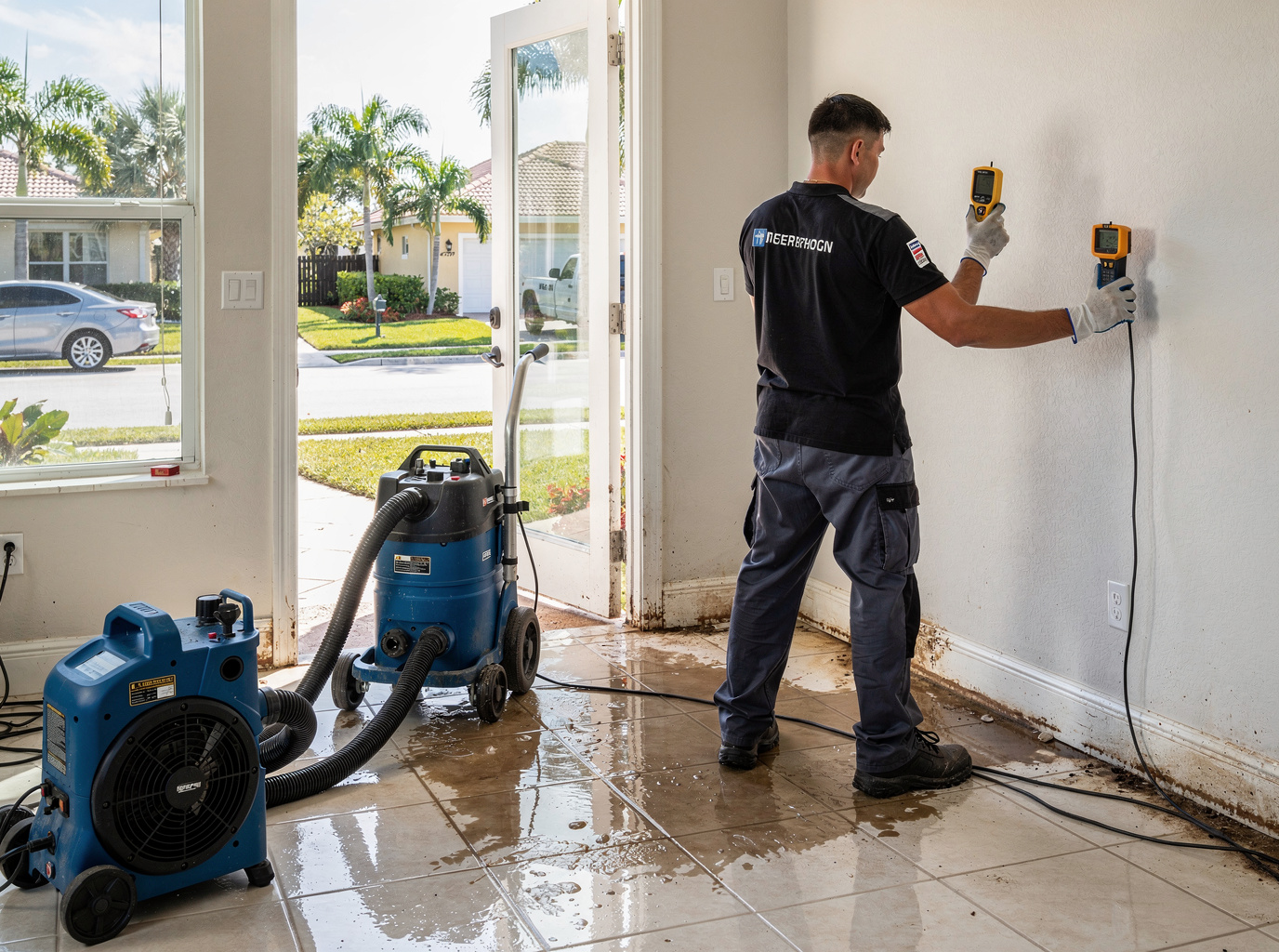
Our water damage work starts with the source, not the wet carpet. The water is located and stopped before anything is dried, then standing water is extracted, moisture is mapped beyond the visible wet area, and a written scope is prepared before further work. The rebuild permit route is confirmed with the City of Pembroke Pines.
Most drying problems begin before any drying equipment arrives. If the failed supply line, angle stop or appliance connection is still releasing water, dehumidifiers only manage the symptom, and a drying plan built on a structure still taking on water will not finish the job.
Standing water is removed by extraction before drying begins. Water left in carpet pad, under baseboards or in low corners keeps wicking into materials while the room is being set up. Extraction comes first so that the area that has to be dried is as small as possible.
Moisture mapping goes past the visible wet area. Readings are taken in drywall, baseboards, flooring and adjacent rooms, because water that crosses a wall or runs under a floor rarely stops at the edge of the stain. In a city of 176,714 residents (U.S. Census Bureau estimate, July 1, 2025), many homes share framing and open layouts, so those readings decide where the drying effort goes.
Before further work, a written scope records what was found, what will be dried, what may need removal and what the next step is. Photos, moisture readings and the scope are kept for the homeowner's records, including any conversation with an insurer. The scope documents the work and makes no coverage promise.
Rebuild work often needs a permit, so the route for the specific job is confirmed with the City of Pembroke Pines before repairs begin.
Why Water Damage in a Pembroke Pines Home Should Not Wait
Delaying water damage work in a Pembroke Pines home usually makes the job bigger. Water keeps moving after the visible leak stops, wet drywall, insulation and flooring lose their integrity, and damp materials can become a mold risk in South Florida humidity. The longer extraction and drying wait, the larger the demolition and rebuild scope tends to be.
A leak that has stopped is not the same as water that has stopped. After a supply line fails, water keeps travelling down wall cavities, along slab tops, under flooring and into cabinet bases. Drying the visible surface does nothing for water already out of reach.
Building materials respond to that moisture in predictable ways. Drywall softens and loses its ability to hold fasteners and finish. Insulation that stays wet loses performance and holds moisture against the framing. Wood flooring and subfloor can cup, swell or delaminate. Once materials stay wet long enough in a humid home, the conditions for mold growth are present, which is why the drying plan has to reach the materials behind the visible wall.
Flood exposure adds to the urgency. FEMA Flood Insurance Rate Maps for Broward County became effective on July 31, 2024, and high-risk Special Flood Hazard Areas are classified A, AE, AH and VE. The City of Pembroke Pines Engineering Division can state a specific property's flood zone. Knowing the zone helps a homeowner plan, but the drying work itself follows the moisture readings.
Waiting also changes the scope. Materials dried promptly are more often saved in place, while materials left wet longer tend to need removal. Each added day can mean more demolition, more rebuild work and more disruption to the household. Calling early keeps the scope focused on the water that is actually there.
Proof: How Water Damage Work Is Scoped and Verified
Water damage work is verified by moisture readings, not by how a room looks. The job runs in a fixed sequence: identify and stop the source, extract standing water, take readings in affected and adjacent materials, set a drying plan from those readings, re-check progress against the same readings, and document each stage before further work begins.
- Source identified and stopped. The failed line, fitting, appliance or drain is located and shut off, and the homeowner is shown what was found.
- Standing water extracted. Visible water is removed from floors, pad and low spots before drying equipment is set.
- Moisture readings taken. Readings are recorded in affected materials, in adjacent rooms and in accessible wall cavities, so the wet area is defined by measurement rather than by the stain.
- Drying plan set from the readings. Dehumidification and air movement are placed where the readings show moisture, and the plan states which materials are expected to dry in place.
- Progress re-checked against readings. The same points are measured again on a set schedule. A falling reading confirms progress, not an impression of the room.
- Photos and readings documented. Each stage is recorded so the homeowner has a record of the work.
- Written scope before further work. Before demolition or rebuild begins, the written scope lists the affected materials, the drying results and the recommended next steps.
The Scenario Most Pembroke Pines Water Pages Skip: The Leak That Looks Small From the Room Side
A slow supply-line leak behind a kitchen or bathroom wall is the water damage scenario that looks smallest from the room. It shows as a faint stain and a musty smell while the cavity, insulation and subfloor have been wet for weeks. The honest sequence is to stop the source, open only what the readings show as wet, extract and dry, check for mold growth, then scope the rebuild.
The room side of the problem is deceptive. A faint ring on a baseboard or a soft patch of paint can look cosmetic, and a musty smell is easy to blame on the season or the drains. Behind the wall, a pinhole in a supply line may have released water for weeks, saturating insulation, the top plate and subfloor where no one looks.
Plumbing runs through interior walls in many homes, including those in Pembroke Pines, and a kitchen sink or bathroom vanity is a common place for a slow leak to hide. Because the water moves before it shows, the first step is not to cut the wall open. The supply is stopped, the cavity is confirmed as no longer being fed, and moisture readings are taken through the wall, the adjacent cabinets and the floor.
Only the material that the readings show as wet is opened. This keeps the repair smaller and gives a clear record of why each opening was made. Standing water is extracted from the floor, and the cavity is dried under measured conditions until readings return to a dry standard.
Once the readings are down, the structure is checked for mold growth. Where visible growth or a persistent odour points to a mold question, that is a separate scope covered on the mold remediation service page. Mold work is not assumed. It follows what the inspection finds.
Only after drying and any mold work is complete is the rebuild scoped: insulation, drywall, cabinets, trim, subfloor or flooring are replaced as the readings and inspection require, and each decision is written down.
The same leak in a condo raises a different question. Responsibility can depend on the condominium documents and the water's source, and unit owners and associations may each cover different parts of the building. This page does not give legal advice on that split. The documents and the water source decide it, so both should be gathered early.
Water Damage in Pembroke Pines, Up Close
Water damage in Pembroke Pines involves four work areas: water extraction, burst pipes and supply-line failures, structural drying with moisture mapping, and appliance and AC leaks. Extraction removes standing water, supply-line failures are stopped at the source, structural drying is measured by moisture mapping, and appliance and AC leaks are traced to the room next door.
Water Extraction
Water extraction removes standing water from floors, carpet, pad and low areas, and it comes before drying in every water damage job. Water left in place keeps moving into subfloors, baseboards and cabinet bases while the room is being set up, so removing the visible water first limits the area that must be dried. Hard floors such as tile, sealed wood and vinyl hold water on the surface and at the seams, so water is pulled from the surface and the joints. Carpet and pad hold water like a sponge, and the pad may need to come out so the subfloor can dry. Before drying equipment is set, low spots, door thresholds, corners and accessible wall and floor cavities are checked to confirm no standing water remains, and the readings confirm what the eye cannot see.
Burst Pipes and Supply-Line Failures
A burst pipe or failed supply line is handled by shutting off the water before any cleanup begins. Shutting off the affected fixture, or the whole home's supply if needed, stops new water from entering the structure. Common failure points include braided supply lines to sinks, toilets and refrigerator icemakers, angle stops under sinks, water heater connections and fittings, and AC condensate lines that back up into a closet or ceiling. Once the source is stopped, the wall cavity behind the failure is opened only as far as moisture readings require and is dried in place. The failed part is documented with photos and a note of where it was found. That record of the source goes into the homeowner's files, and it forms part of the written scope. Documentation records the work.
Structural Drying and Moisture Mapping
Structural drying is a measured process that starts with moisture mapping and ends only when readings reach a dry standard. Readings are taken in drywall, baseboards, flooring and adjacent rooms, because water spreads beyond the visible wet area through framing, shared walls and open floor plans. The readings are recorded on a map of the home, so the drying plan follows the actual wet materials. Dehumidification and air movement are set according to those readings, and their effect is checked against the same points over time. Before walls are closed or flooring is laid, the materials are measured again against the dry standard for the structure. Drying is not judged by how a surface feels, because a surface can feel dry while the material behind it is still wet.
Appliance and AC Leaks
Appliance and AC leaks are often slow, which is why they cause damage that is hard to see. A dishwasher door seal, a washing machine hose or drain, or a refrigerator water line can release water for a long time before anyone notices a stain. AC condensate that overflows from a drain pan or a clogged line can wet a ceiling, a closet or the flooring beneath an air handler. The slow-leak pattern usually shows up under flooring first, so the work checks the room next door as well as the room where the appliance sits. Water that reaches a shared wall or subfloor can travel well beyond its entry point. Water that comes in from rain, flooding or a roof opening follows a different path and is covered on the storm damage cleanup page.
Water Damage Questions Pembroke Pines Homeowners Ask
What to do if you find water damage in your house?
Stop the source if it is safe to do so, and avoid walking through standing water near outlets or fixtures, switching off power to affected circuits first. Photograph the damage before anything is moved, then call a company that can stop the source, extract standing water and take moisture readings.
Who is responsible for water damage in a condo in Florida?
Responsibility depends on the condominium documents and on where the water came from. Unit owners and the association can each be responsible for different parts of the building, such as interior finishes or shared plumbing. This page does not give legal advice on that split. Read the condominium documents, identify the water source and ask the association in writing where it places responsibility.
How expensive is water damage?
The cost depends on the factors that shape the job: how much area is affected, which materials are wet, how long drying takes and how easily the affected areas can be reached. Materials dried quickly may stay in place, while materials that stay wet may need removal and rebuild. A written scope lists each factor so the work can be reviewed.
How do you know the structure is actually dry?
The structure is dry when moisture readings in affected and adjacent materials reach the dry standard, not when surfaces look or feel dry. Readings are taken at the same points on a schedule, recorded and checked again before walls are closed or flooring is installed. The readings are kept for the homeowner's records.
Do I need a permit to repair water damage in Pembroke Pines?
Some repairs do. Site and engineering permits run through the City of Pembroke Pines Engineering Division at 8300 South Palm Drive, which needs a minimum of two weeks to process an application. All construction under a permit must conform to the City's Code of Ordinances. The same division can confirm a property's flood zone under the FEMA maps effective July 31, 2024, and whether an Elevation Certificate is on file. Confirm the current route for your specific repair with the City before rebuild work begins.
If water is in your Pembroke Pines home now, call (954) 481-0645. For questions that are not urgent, visit the contact page.